Why do elders need a little more care with seeds?
Three reasons: swallowing, medicines and fibre. Seeds that swell in water can swell in the food pipe if they are swallowed dry, older adults are more likely to be on daily medicines, and a sudden jump in fibre is uncomfortable at any age.
None of this is a reason to avoid seeds. It is a reason to prepare them properly, start small and keep the doctor informed.
How much fibre do they need, and what does one spoon give?
The US National Institutes of Health advise adults to get 22 to 34 g of fibre a day. Two level tablespoons of chia seeds (21 g) give 7.2 g, which is about the fibre of a kilo of peeled kheera (USDA).
Fibre and water together help keep the gut regular. Start with a little, build up gradually, and make sure they drink plenty of water through the day. Ahista ahista shuru karein, aur pani zyada pilayein.
How should you give chia seeds to elders?
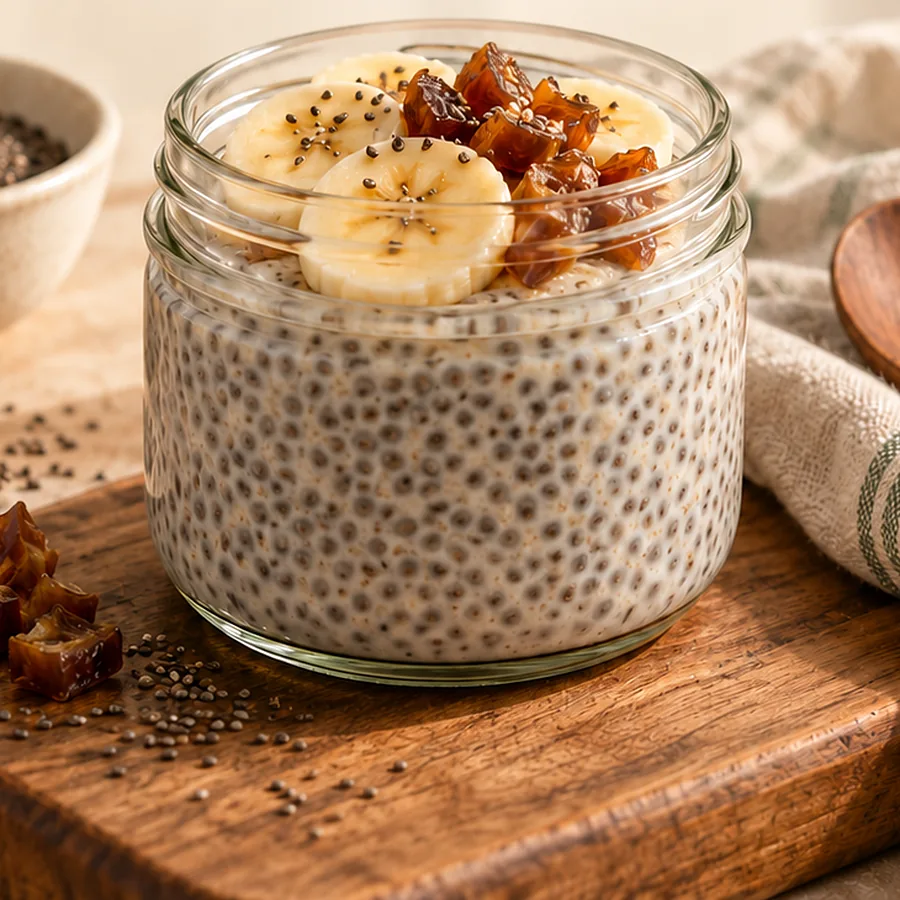
Always soaked, never dry. Stir 1 tablespoon into milk or dahi, leave it for at least 15 minutes or overnight in the fridge, and serve it soft. Start with one tablespoon a day.
Anyone who has trouble swallowing should only have chia that is fully soaked, and should check with their doctor first. In a published case, a man who swallowed a tablespoon of dry chia seeds followed by water needed an emergency endoscopy.
How should you give flax seeds (alsi)?
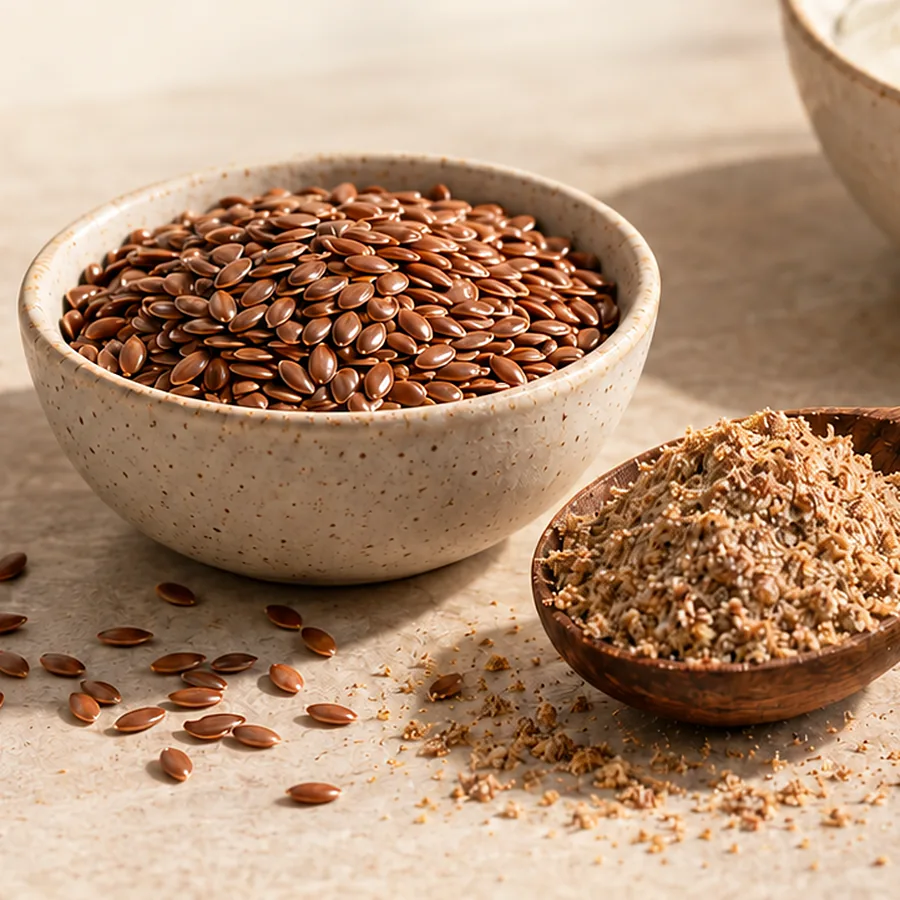
Ground, not whole. In a three-month trial, 30 g a day of whole flaxseed did not raise blood levels of ALA, the plant omega-3, while the same amount milled did. Whole seeds largely pass through.
Roast the seeds lightly, grind a small batch, and add 1 tablespoon to dahi, oats or the atta for roti, the way many grandmothers already do. One tablespoon (10 g) has 2.3 g of ALA and 2.7 g of fibre. Keep to 1 to 2 tablespoons a day; the US NIH advises against eating raw or unripe flaxseed.
What about ispaghol?
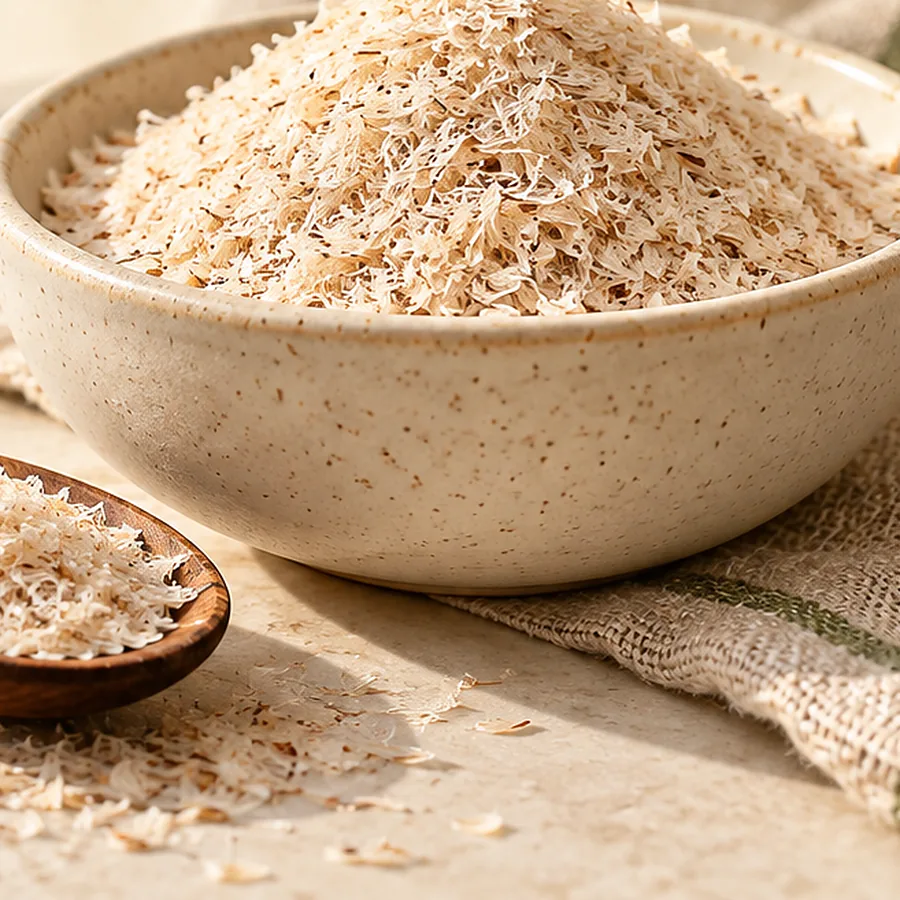
Ispaghol must go into a full glass of water, at least 240 ml, and be drunk straight away. Taken dry or with too little water it can swell and block the throat; people who have difficulty swallowing should not take it at all. In one reported case, a 76-year-old man with Parkinson's disease needed an endoscopy to remove psyllium that had lodged in his food pipe.
Keep ispaghol two hours apart from medicines, and see a doctor if constipation lasts more than a week. More in ispaghol vs chia seeds.
Which medicines mean "ask the doctor first"?
Blood pressure medicine: in trials, chia and flaxseed lowered blood pressure by a few points. The effect is small and the seeds are not a treatment, but it is a reason to mention regular use to the doctor.
Blood thinners: the US NIH notes possible interactions between flaxseed and anticoagulant or antiplatelet medicines.
Kidney stones or kidney disease: keep portions small and ask first. Never stop or change a prescribed medicine because of a food.
Are pumpkin and sunflower seeds suitable for elders?
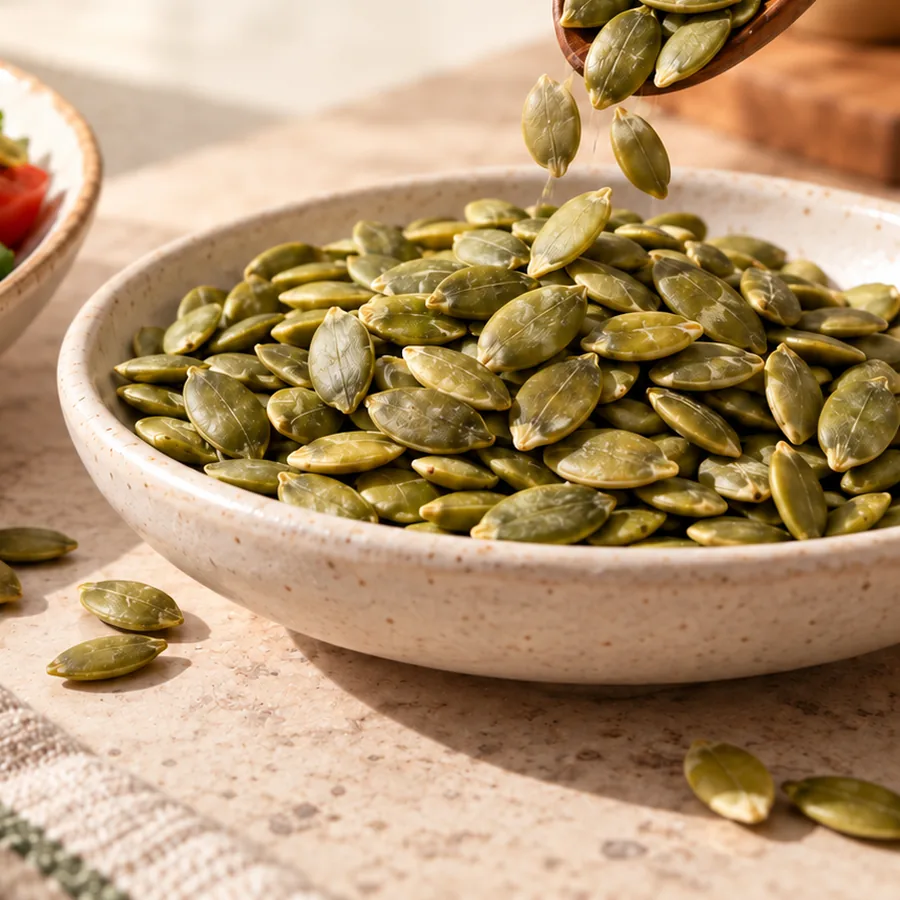
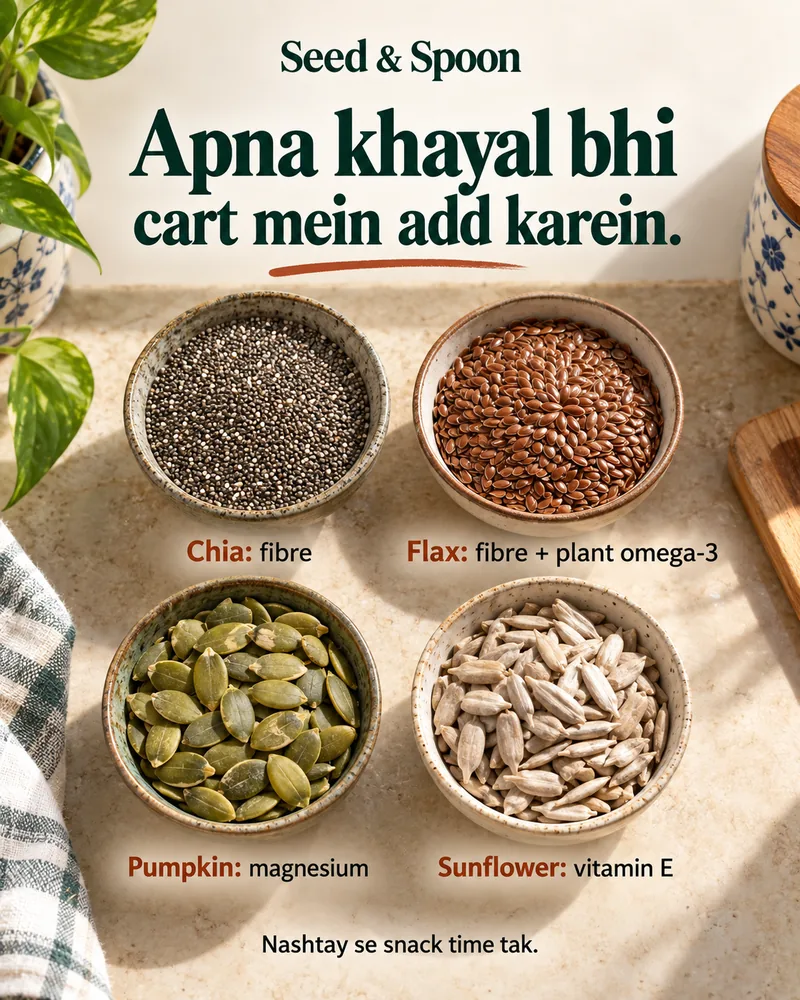
Yes, as food. A 30 g handful of pumpkin seeds has 178 mg of magnesium, 42% of the daily value, and magnesium contributes to normal muscle function and to a reduction of tiredness and fatigue. A 30 g handful of sunflower seeds gives more than half of the daily value for vitamin E.
If chewing is difficult, crush or grind the kernels and stir them into dahi or daliya.
What is an easy way to start, and what does it cost in Lahore?
One spoon at breakfast: soaked chia in milk or dahi on most days, with a spoon of ground flax in the roti atta. A measuring spoon keeps the amount the same every day.
The Four-Seed Box has chia, pumpkin, sunflower and flax seeds, 250 g each, with a 1-tablespoon measuring spoon, for Rs 2,499 with free delivery (November 2026). The seeds are cleaned and hand-sorted in Lahore, with nothing added, and delivered the next day in Lahore, cash on delivery. A thoughtful gift for parents.
This is general information, not medical advice. If you have a health condition, are pregnant or breastfeeding, or take regular medicines, check with your doctor before making big changes to your diet.