What happens in the first 15 minutes?
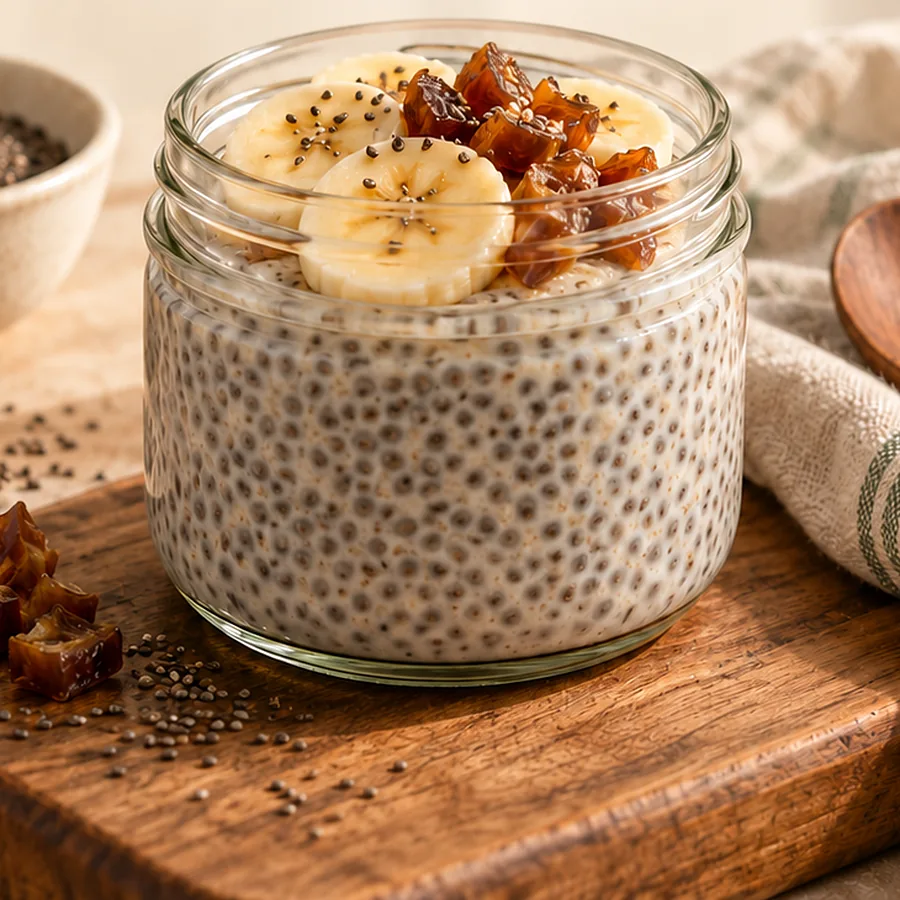
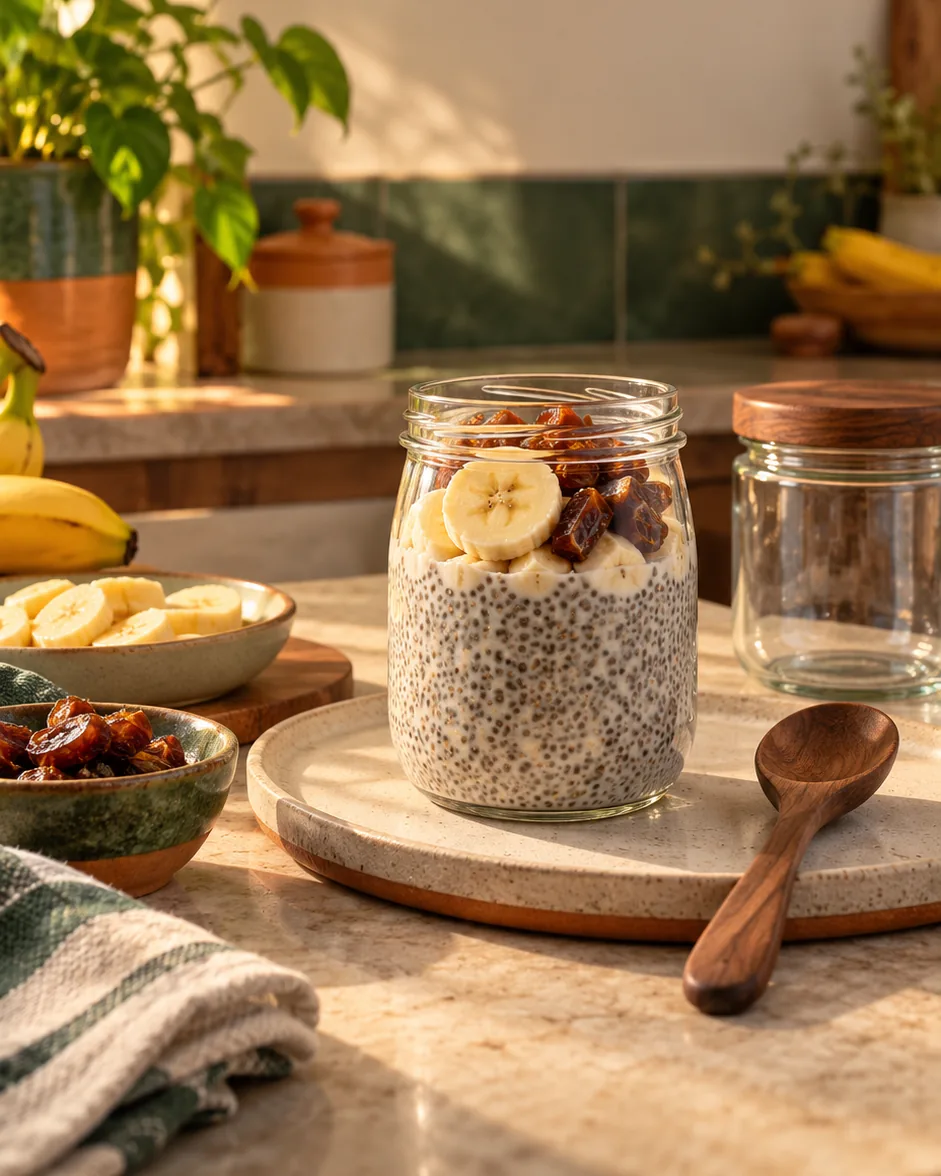
A gel forms. When chia meets water, fibres 20 to 50 nanometres wide grow out of the seed coat and link into a network that traps water, so each seed ends up inside a clear capsule. In the lab, 15 g of chia set 100 ml of water into a gel in 15 to 20 minutes; in kitchen terms, one tablespoon sets about 70 ml.
That is the reason for the one rule of chia: soak it first, in a glass or a bowl, so that it swells there and not on the way down. Pehle bhigo dein, dry kabhi nahi.
How much fibre does your body get?
Two level tablespoons (21 g) of chia seeds contain 7.2 g of fibre, which is 26% of the 28 g daily value (USDA FoodData Central, FDA). One level tablespoon weighs about 10.5 g and gives about 3.6 g.
For scale, that is the fibre of about one and a half medium apples (a medium apple with skin has 4.4 g), or of about a kilo of peeled kheera. The US National Institutes of Health advise adults to get 22 to 34 g of fibre a day, to add it a little at a time, and to drink water so the fibre can do its work.
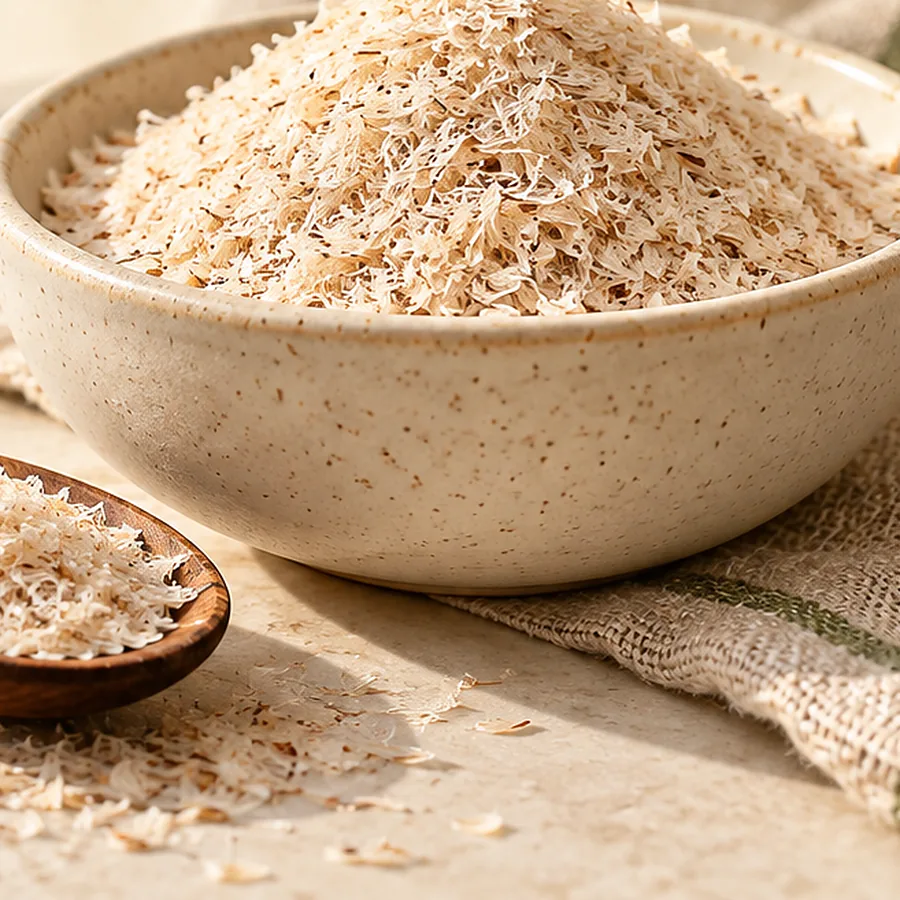
Fibre, with water, helps keep the gut regular. That is as far as the claim goes: chia is a food, not a treatment for constipation. For that, the stronger evidence is for ispaghol; see ispaghol vs chia seeds.
What does the plant omega-3 in chia do?
The same two tablespoons carry 3.7 g of alpha-linolenic acid (ALA), a plant omega-3. The adequate intake set by the US Institute of Medicine is 1.6 g a day for men and 1.1 g for women, so a serving covers it more than twice over.
The authorised wording for this nutrient is: "ALA contributes to the maintenance of normal blood cholesterol levels." The effect is obtained with a daily intake of 2 g of ALA.
One honest note: ALA is not fish oil. The body converts only a limited amount of ALA into EPA and very little into DHA, the omega-3 fats found in fish.
What about calcium and magnesium?
Two tablespoons give 133 mg of calcium (10% of the daily value) and 70 mg of magnesium (17%). In the authorised wordings, calcium is needed for the maintenance of normal bones, and magnesium contributes to a reduction of tiredness and fatigue and to normal muscle function.
You will also read that chia has five times more calcium than milk. That is true per 100 g and misleading per serving; the numbers are in chia seeds and milk: the calcium truth.
Do chia seeds burn belly fat or lower blood sugar?
No. This has been tested directly. In a 12-week trial, 76 overweight adults drank 25 g of chia in 250 ml of water twice a day before meals; body weight and body composition did not change. Pooled analyses of the trials find no significant effect on weight or BMI, and a 2024 analysis of 8 trials found no effect on fasting blood glucose or HbA1c.
What one small study did find is fullness: 24 adults who ate yogurt with 7 g or 14 g of chia as a mid-morning snack felt less hungry and ate a smaller lunch that day. That is a single meal, not a result on the scale.
Yeh fibre hai, magic nahi. If you take medicine for diabetes or blood pressure, chia does not replace it.
How should you eat chia seeds every day?
Soak 1 to 2 tablespoons in milk, water or dahi for about 15 minutes, stirring once so the seeds do not clump, or leave the jar in the fridge overnight. Start with 1 tablespoon a day and drink water through the day.
Never eat chia dry by the spoonful. In a published case, a man with a history of swallowing trouble took a tablespoon of dry chia seeds, drank a glass of water, and needed an emergency endoscopy because the seeds swelled in his food pipe. The advice from the American College of Gastroenterology: never consume dry chia seeds.
Ask a doctor first if you take blood pressure medicine or blood thinners, have trouble swallowing, or have kidney stones or kidney disease. Whole seeds are a choking hazard for young children. For elders, see seeds for parents and elders.
This is general information, not medical advice. If you have a health condition, are pregnant or breastfeeding, or take regular medicines, check with your doctor before making big changes to your diet.
What does a daily chia habit cost in Lahore?
At Seed & Spoon in November 2026, chia seeds cost Rs 699 for 250 g, Rs 1,299 for 500 g and Rs 2,499 for 1 kg. At 2 tablespoons a day a 250 g pouch lasts about 12 days, and the daily cost works out at roughly Rs 52 to Rs 59 depending on the pack.
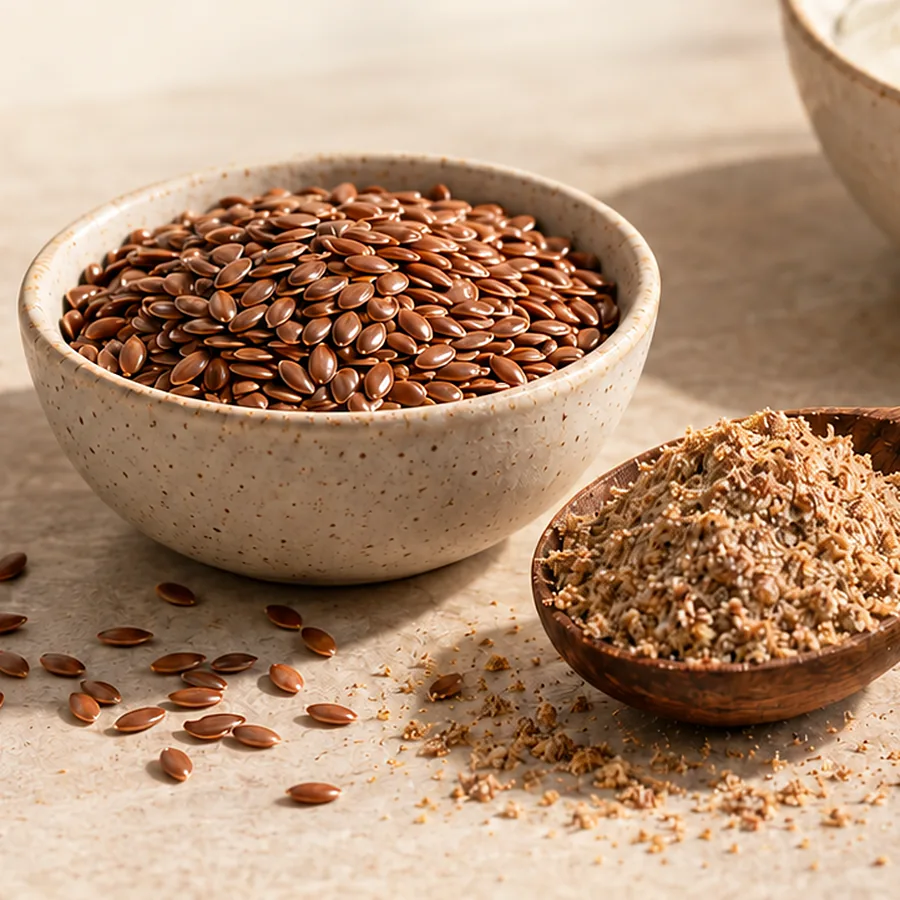
The seeds are cleaned and hand-sorted in Lahore, with nothing added. Delivery is next day in Lahore, cash on delivery, with a Rs 999 minimum order. The Four-Seed Box has chia, pumpkin, sunflower and flax seeds, 250 g each, with a measuring spoon, for Rs 2,499 with free delivery.