Alsi kya hai?
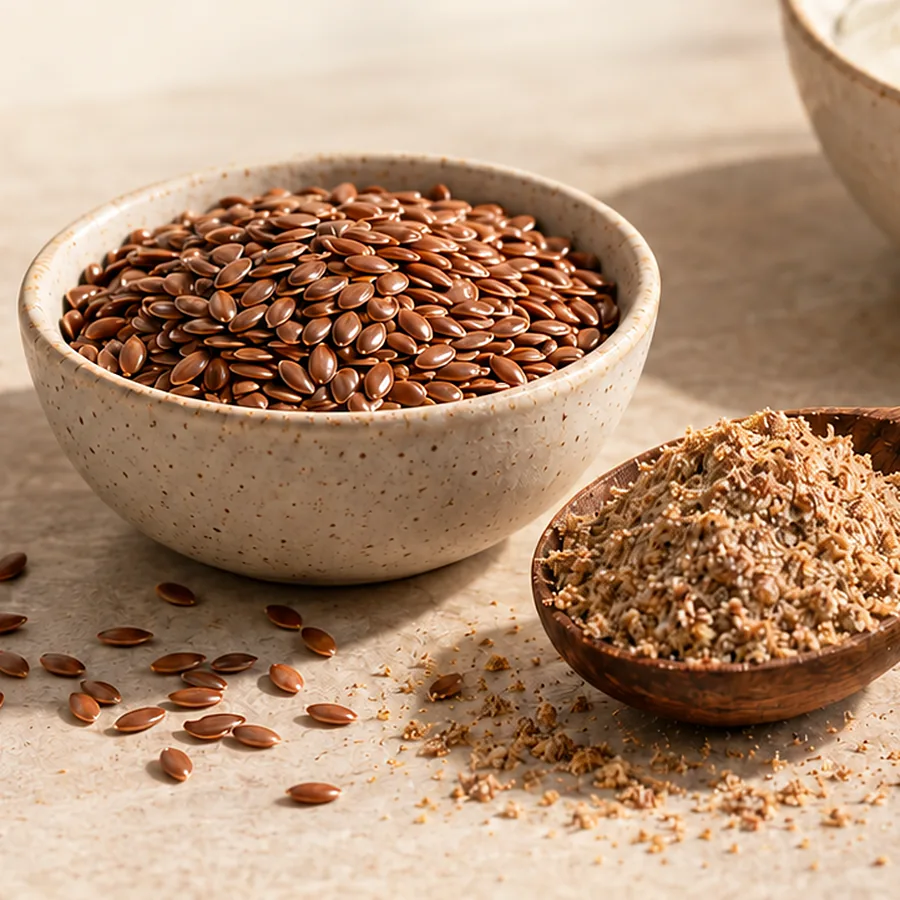
Alsi is flaxseed, also called linseed: the small, glossy brown seed of the flax plant, Linum usitatissimum. It has a long history in Pakistani kitchens, from winter pinni and laddu to alsi wali roti.
Aaj kal log ise dahi, oats, daliya aur smoothie mein bhi istemal karte hain, aur yahi rozana ka sab se aasan tareeqa hai.
What is in alsi (per tablespoon and per 28 g)
USDA FoodData Central gives a level tablespoon of whole flaxseed as 10.3 g and a tablespoon of ground flaxseed as 7 g.
One tablespoon whole (10.3 g): about 55 kcal, 2.8 g fibre, 1.9 g protein and 2.35 g ALA. One tablespoon ground (7 g): about 37 kcal, 1.9 g fibre and 1.6 g ALA.
Per 28 g (1 oz): about 151 kcal, 7.7 g fibre, 5.2 g protein and 6.5 g ALA, plus 111 mg magnesium. Most of the fat in flaxseed is polyunsaturated, and only a small part is saturated.
Fibre: both kinds
Flaxseed contains both soluble and insoluble fibre. The soluble part forms the slippery gel (lu'aab) you see when alsi sits in water. Soluble fibre slows digestion a little and can help you feel full; insoluble fibre adds bulk and helps food move through the gut.
In practice, 1 tablespoon of ground alsi in your dahi adds about 2 g of fibre. Increase it slowly and drink water through the day, because more fibre needs more fluid.
Plant omega-3 (ALA)
Flax is among the richest food sources of ALA. A single tablespoon of whole seed, with 2.35 g of ALA, is more than the daily adequate intake the NIH sets for adults: 1.1 g for women and 1.6 g for men.
As with chia, ALA is not the same as the EPA and DHA in fish, and the body converts only a small share of it. Flaxseed also contains plant compounds called lignans, which researchers are studying; the NIH's NCCIH notes that research on lignan extracts is still limited.
What studies suggest
Blood pressure: in a six-month trial, people with peripheral artery disease who ate foods containing 30 g of milled flaxseed a day (about 4 tablespoons of ground flax) had lower blood pressure than a placebo group, with the clearest effect in those who already had high blood pressure (Rodriguez-Leyva 2013). Most participants were already on medicines, and 30 g is more than most people eat, so this suggests a possible benefit, not a replacement for treatment.
Blood sugar and weight: NCCIH says more research is needed on flaxseed and blood sugar control, and that flaxseed lignan extract and flaxseed oil supplements do not seem to help with weight loss.
Bottom line: alsi is a nutritious food with fibre and ALA. It is not a treatment for blood pressure, diabetes or any other condition.
How to eat alsi for best results
Grind it. Whole seeds can pass through the intestine undigested, and Mayo Clinic notes that ground flaxseed is easier to digest. Use a spice grinder and grind a few spoonfuls at a time.
Roast lightly, if you like. NCCIH advises against eating raw or unripe flaxseed. Dry-roasting alsi in a pan for 2–3 minutes before grinding is a common desi habit and gives a nuttier taste.
Store it right. Keep whole seeds airtight in a cool, dark place, as Mayo Clinic advises. Keep ground alsi in a closed jar in the fridge and use it within a few days.
Quick ideas: stir ground alsi into raita with roasted zeera; blend it into lassi or a smoothie; or make a dry chutney by grinding roasted alsi with a little garlic, red chilli and salt, then sprinkle it over daal or dahi.
Use 1 tablespoon a day to start: in dahi, oats or daliya, blended into a smoothie, or kneaded into roti atta. Recipes are in desi breakfast ideas with seeds and how to use alsi.
Who should check with a doctor first
NCCIH notes that flaxseed might interact with blood-thinning (anticoagulant or antiplatelet) medicines, and that some studies suggest flaxseed may be unsafe in pregnancy, although the evidence is not conclusive. Higher amounts can cause bloating, fullness or diarrhoea. If you have a bowel condition or difficulty swallowing, ask first.
This is general information, not medical advice. If you have a health condition, are pregnant or breastfeeding, or take regular medicines, check with your doctor before making big changes to your diet.