Is there an official daily amount?
No. Dietary guidelines set targets for nutrients, not for seeds. For example, the NIH sets the adequate intake of plant omega-3 (ALA) at 1.1 g a day for women and 1.6 g for men, and Harvard's Nutrition Source says adults need at least 25 to 35 g of fibre a day. Seeds are one easy way to move towards those numbers.
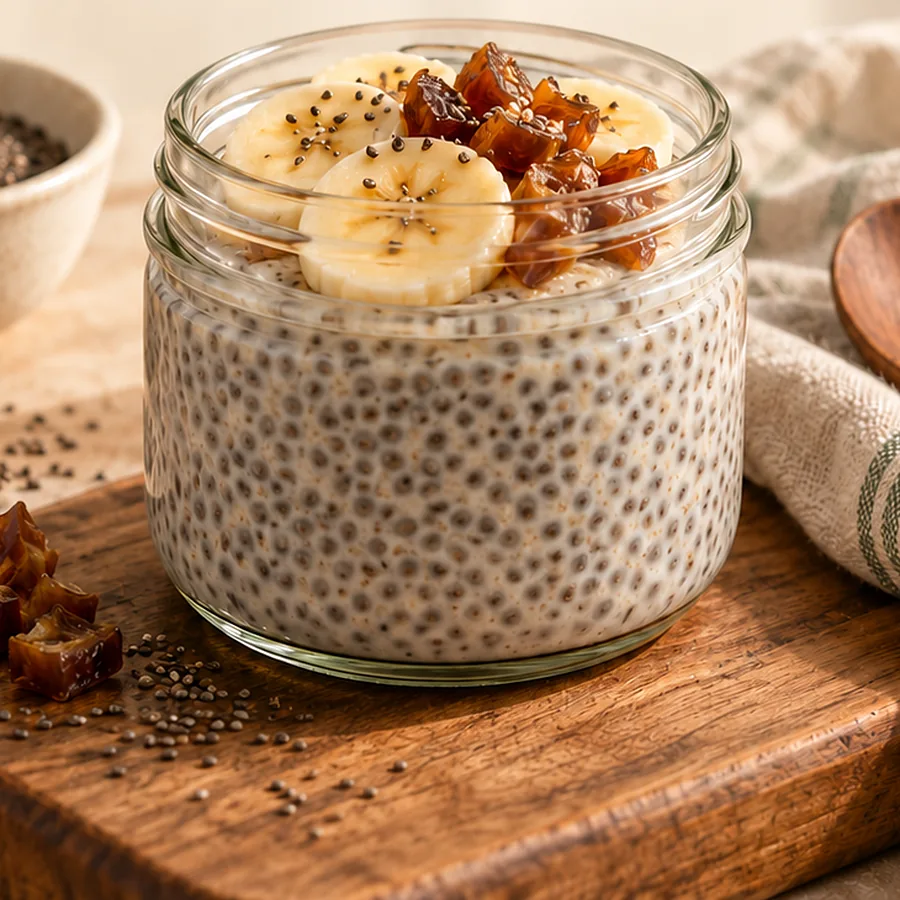
Nutrition labels and USDA usually list seeds per ounce (28 g), which is a snack-size serving. For chia, Cleveland Clinic suggests starting with 1 tablespoon a day and working up to 2 tablespoons.
Why we use 1 tablespoon
A level tablespoon is easy to measure, fits into one meal, adds a useful amount of fibre, omega-3 or minerals, and is small enough that most people can add it without stomach upset. It also keeps calories in check.
That is why the Four-Seed Box comes with a 1-tablespoon measuring spoon. A regular eating spoon (chamach) is not a tablespoon: it can hold much less or much more, so measure with a proper spoon, level with the top.
Ek level tablespoon, har seed ka, roz: bas itna kaafi hai.
What 1 tablespoon gives you, seed by seed
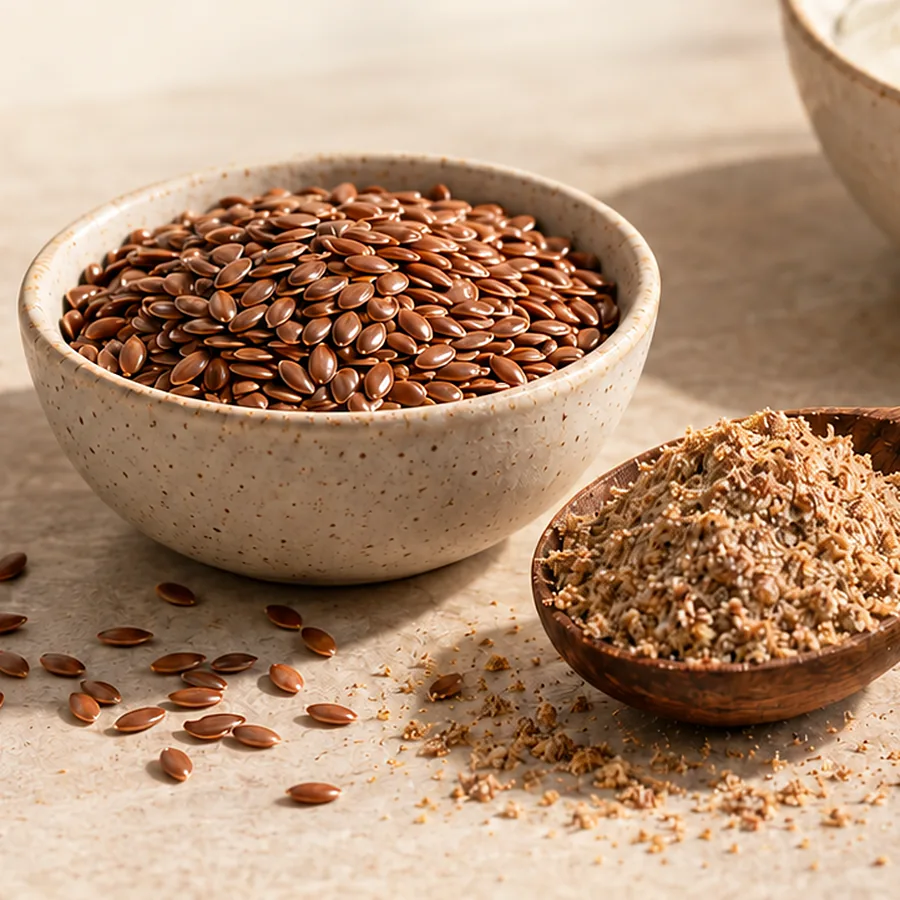
Whole flaxseed (alsi), 1 tbsp = 10.3 g: about 55 kcal, 2.8 g fibre and 2.35 g ALA (USDA).
Ground flaxseed, 1 tbsp = 7 g: about 37 kcal, 1.9 g fibre and 1.6 g ALA.
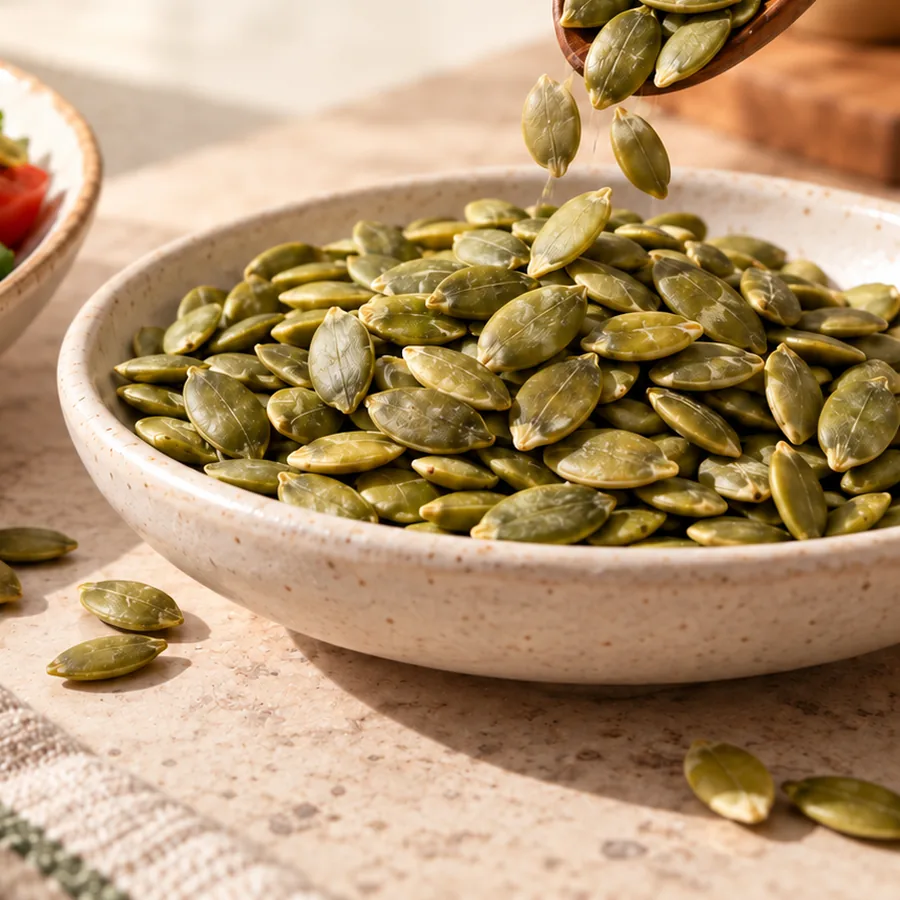
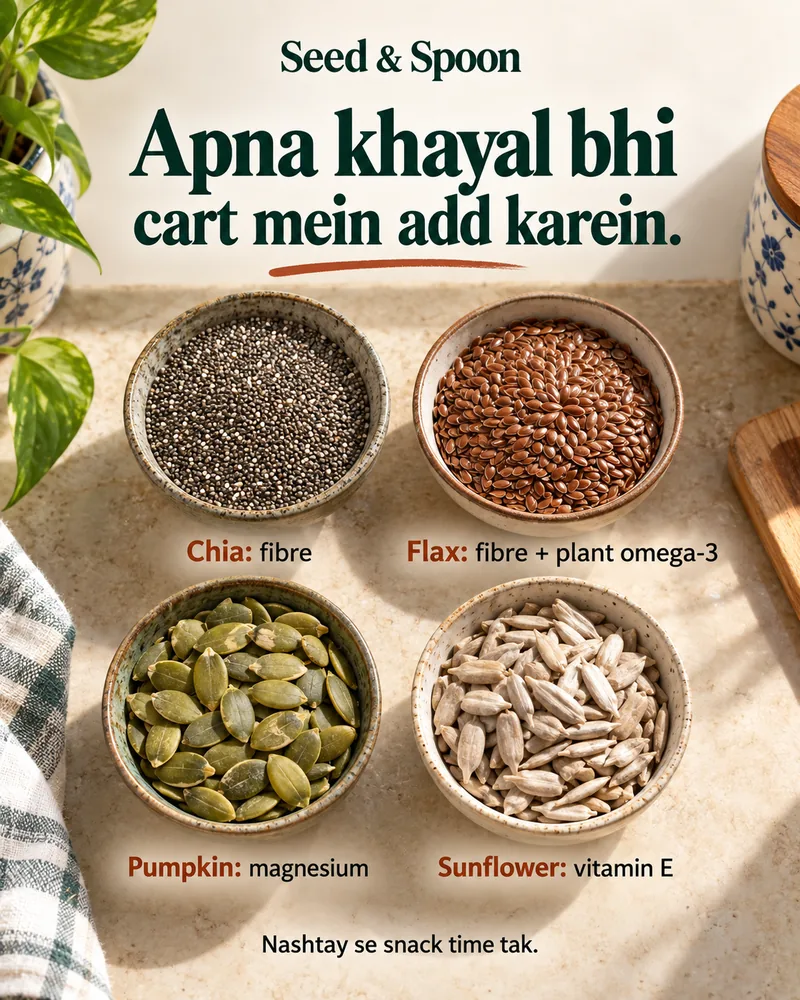
Pumpkin kernels, 1 tbsp ≈ 8 g (USDA lists 129 g per cup): about 45 kcal, 48 mg magnesium and 0.6 mg zinc.
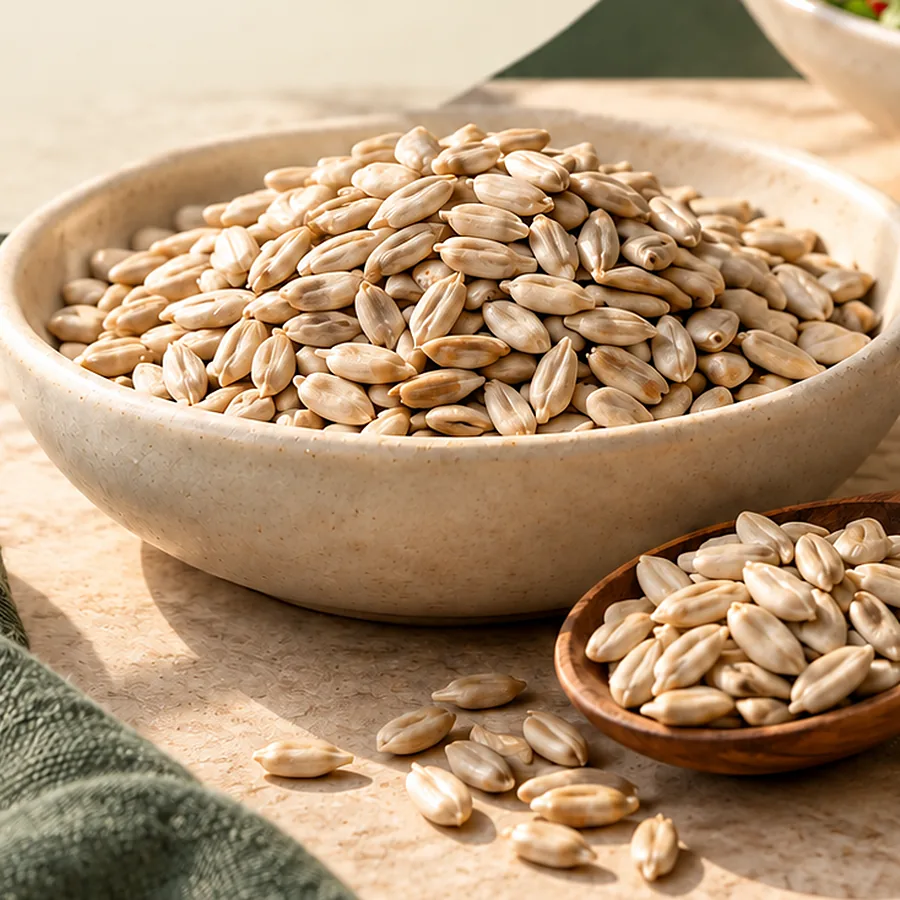
Sunflower kernels, 1 tbsp ≈ 9 g (140 g per cup): about 51 kcal, 3.1 mg vitamin E and 28 mg magnesium.
Hulled white til (sesame), 1 tbsp = 8 g: about 50 kcal. Hulling removes most of sesame's calcium: USDA lists about 5 mg per tablespoon for hulled seeds, against roughly 88 mg for whole sesame.
Chia: USDA lists chia per ounce, not per spoon. 28 g has about 138 kcal, 9.8 g fibre and 5.1 g ALA. A level tablespoon usually holds around 10–12 g, which would give roughly 3.4–4.1 g of fibre and 1.8–2.1 g of ALA.
How much of each seed
Chia: 1–2 tablespoons a day, always soaked. Alsi: 1 tablespoon ground (up to 2), freshly ground. Pumpkin and sunflower: 1–2 tablespoons as a topping, or a small handful (about 28 g) as a snack. Til: about 1 tablespoon in roti, naan or cooking; sesame is a common allergen.
Tukh malanga: about 1 teaspoon, soaked in a glass of water (see tukh malanga). Gond katira: about 1 teaspoon soaked overnight; follow the pack directions.
Ispaghol is psyllium husk, a bulk-forming fibre, not a topping. Follow the pack directions (usually 1–2 teaspoons stirred into a full glass of water), never take it dry, and ask a pharmacist or doctor first if you take medicines.
In total, 2–4 tablespoons of seeds a day is plenty for most adults. You do not need every seed every day; rotating them through the week works well.
Start low, go slow
If you do not usually eat much fibre, a sudden jump can cause gas, bloating or discomfort. The NHS advises increasing fibre gradually and drinking plenty of fluids, and Cleveland Clinic gives the same advice for chia. Start with one seed and one tablespoon, then add more over a week or two.
Calories: the part people forget
Seeds are small but rich. By USDA figures, a level tablespoon is roughly 40–60 kcal depending on the seed, so four tablespoons a day comes to about 200 kcal, a snack's worth of energy. Measuring keeps seeds a healthy habit instead of an accidental extra snack.
Who should check with a doctor
Children need smaller amounts, and soaked or ground seeds only. Ask first if you are pregnant or breastfeeding (especially about flaxseed), take blood thinners or other regular medicines, have a bowel condition or difficulty swallowing, or have kidney disease and have been told to limit phosphorus or potassium, since seeds contain both.
This is general information, not medical advice. If you have a health condition, are pregnant or breastfeeding, or take regular medicines, check with your doctor before making big changes to your diet.