Tukh malanga kya hai?
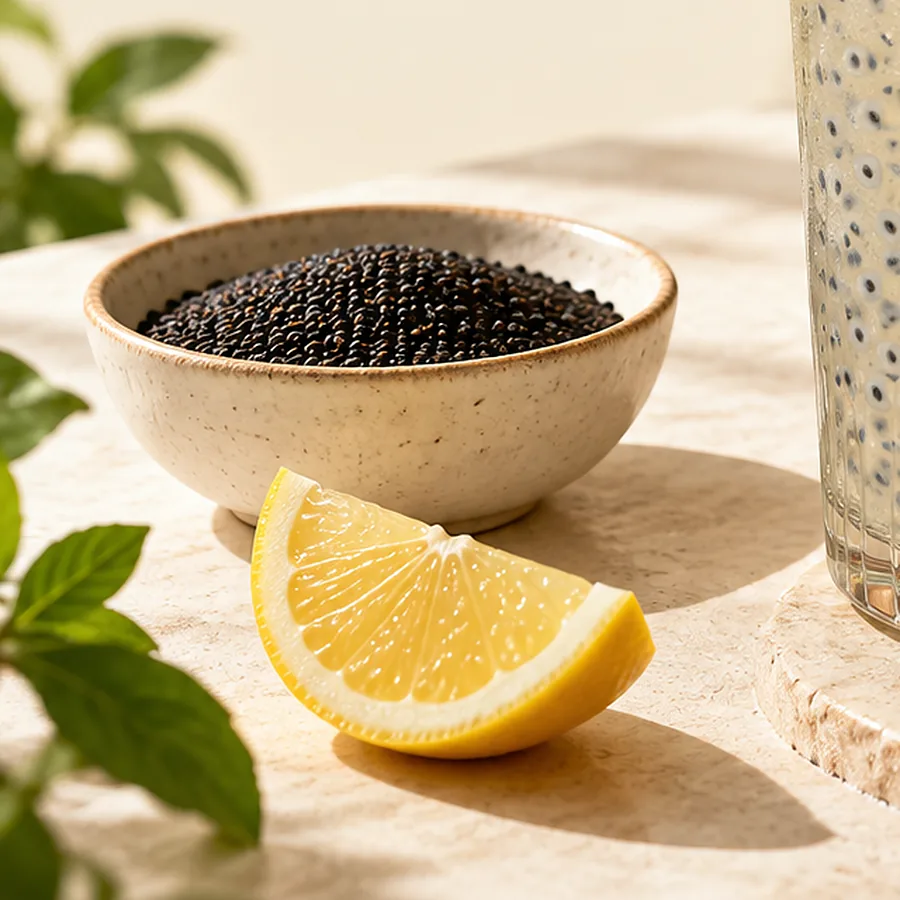
Tukh malanga is the seed of a basil plant (Ocimum basilicum), also sold as sabja or falooda seeds. The seeds are small, teardrop-shaped and jet black. In water they quickly grow a white, jelly-like coat.
Yeh chia nahi hai. Dono dekhne mein milte julte hain, lekin alag seeds hain. Our chia vs tukh malanga guide explains the difference.
What is in it, and why we do not print exact numbers
USDA's standard reference database (FoodData Central, SR Legacy) has an entry for chia but none for basil seeds, so there is no USDA per-serving figure to quote. A 2021 review of the research found that basil seeds contain protein (roughly 11–23 g per 100 g), dietary fibre, fats including linoleic acid and ALA, and minerals such as calcium, potassium and magnesium, but values varied a lot between samples and studies.
Because of that spread, we do not print per-spoon numbers for tukh malanga. If a seller quotes very precise figures, ask where they come from.
What the evidence says
The jelly around a soaked seed is mucilage, a type of soluble fibre. Fibre-rich foods can help you feel full and support regular digestion as part of a balanced diet. Harvard's Nutrition Source notes that soluble fibre can also help lower blood cholesterol and glucose, though that research is on fibre in general, not on tukh malanga.
Specific health claims for basil seeds come mostly from laboratory and animal studies. The 2021 review itself says the seeds' nutritional and functional properties are scarcely known and calls for more research. So we treat tukh malanga as a refreshing summer food, not a remedy.
What about thandak? In desi tradition tukh malanga is considered cooling. There is no scientific evidence for a special cooling effect; the real benefit of a tukh malanga drink in a Lahore summer is the cold water itself. Garmi mein pani zyada piyen.
How to soak tukh malanga
1. Put 1 teaspoon of tukh malanga in a glass (about 250 ml) of water.
2. Stir for the first minute so the seeds do not clump together.
3. Wait 10–15 minutes, until every seed has a full white coat and no hard, dry seeds are left.
4. Add it to your drink. There is no need to drain it. Make it fresh, or keep it covered in the fridge and use it the same day.
Four summer sharbat ideas
Nimbu pani: soaked tukh malanga, lemon juice, a pinch of salt and a little sugar or honey, topped up with chilled water and ice.
Rose sharbat doodh: chilled milk with a spoonful of rose syrup and soaked tukh malanga, the classic falooda flavour without the noodles.
Falooda: layer rose syrup, soaked tukh malanga, cooked falooda sev and cold milk, and top with kulfi or ice cream for special days.
Tukh malanga with gond katira: both swell in water and both are summer traditions. Soak gond katira overnight and tukh malanga for 15 minutes, then add both to sharbat or lemon water.
Go easy on sugar: a glass of sweet sharbat can carry several teaspoons. Use less syrup and more lemon and ice.
Tukh malanga vs gond katira
They are often used together, but they are different things. Tukh malanga is a seed that swells in minutes. Gond katira is a dried plant gum (tragacanth) that is soaked overnight and turns into a soft, clear jelly; a small piece goes a long way.
Buying and storing tukh malanga
Look for clean, jet-black seeds with no dust, stones or stems, in a sealed pack with a packed date. Do the water test at home: real tukh malanga puffs up with a white coat within about 10–15 minutes.
Keep the dry seeds airtight in a cool cupboard and always use a dry spoon. Dry seeds keep well; soaked seeds should be used the same day.
Safety: soak fully, and take care with children
Tukh malanga swells a lot as it absorbs water. Never eat it dry, and do not give dry seeds to children. For young children, give only fully soaked seeds in small amounts and watch them while they drink, because swollen seeds can be a choking risk.
Add fibre gradually and drink enough water, as the NHS advises. If you are pregnant, have a digestive condition or take regular medicines, ask your doctor before having it every day.
This is general information, not medical advice. If you have a health condition, are pregnant or breastfeeding, or take regular medicines, check with your doctor before making big changes to your diet.