Next-day delivery in Lahore · Cash on delivery
Seed & SpoonNatural Seeds

Seed basics

Chia seeds vs tukh malanga: what is the difference?

چیا سیڈز اور تخم ملنگا میں فرق

Last reviewed 2 min read

یہ مضمون اردو میں پڑھیں: تخم ملنگا اور چیا سیڈز میں فرق: پہچان، استعمال اور قیمت

Short answer

Chia (Salvia hispanica) and tukh malanga (basil seeds) are different seeds. Chia is oval and speckled grey, black and white and takes 15–20 minutes to gel; tukh malanga is smaller, jet black and swells in about 10–15 minutes with a white halo. Use chia for overnight breakfasts and tukh malanga for sharbat and falooda. Soak both fully before eating.

Two different seeds

Chia comes from the Salvia hispanica plant. Tukh malanga, also called sabja or basil seeds, comes from a type of basil. Shops sometimes mix the names up, so always check the label.

Dono alag seeds hain. Order karte waqt naam zaroor check karein.

How to tell them apart

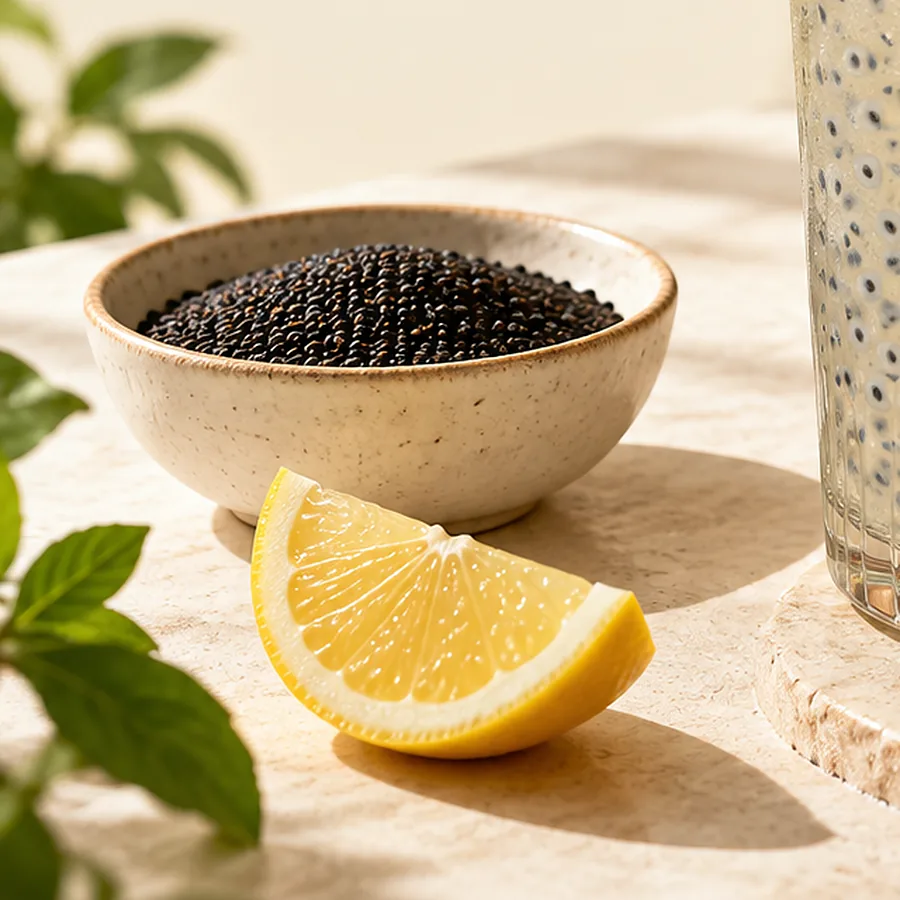
Look: chia is oval and speckled grey, black and white. Tukh malanga is smaller, teardrop-shaped and jet black.

Soaking: tukh malanga swells within about 10–15 minutes and turns cloudy white around the edge. Chia takes 15–20 minutes and is best left overnight.

Texture: chia makes a creamy, pudding-like gel. Tukh malanga gets a slippery coat with a little bite in the centre.

Nutrition: what we know

Chia is well documented. USDA FoodData Central lists about 9.8 g of fibre, 4.7 g of protein and 5.1 g of ALA (plant omega-3) in 28 g (1 oz) of dried chia.

Basil seeds are studied far less. USDA has no standard entry for them, and a 2021 research review found values vary widely between samples: protein of roughly 11–23 g per 100 g, plus fibre and fats that include ALA. Because the numbers vary so much, we do not print per-serving figures for tukh malanga.

Which one to use where

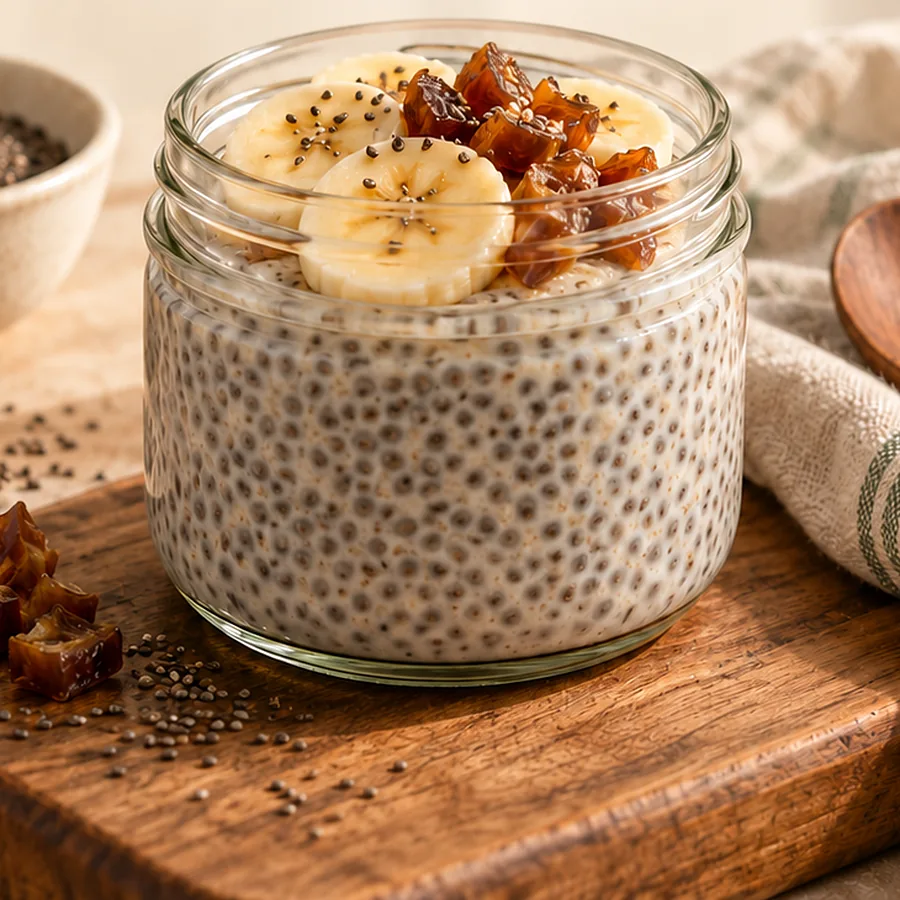
Use chia for overnight breakfasts, dahi bowls and oats. Our guide on how to use chia seeds has the soaking ratio.

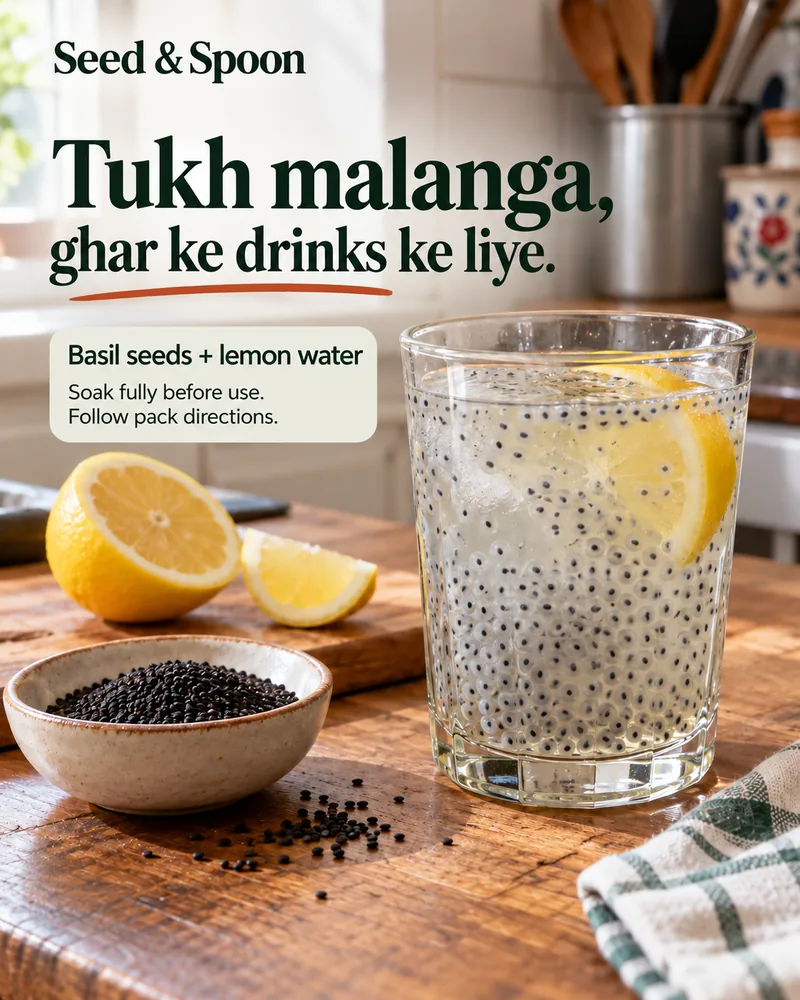
Use tukh malanga for sharbat, lemon water, rose sharbat with doodh and falooda. See how to soak tukh malanga for summer drink ideas.

Soak both fully

Both seeds swell a lot when they absorb liquid. Never eat either one dry by the spoonful, and give children only fully soaked seeds in small amounts.
Common questions

Are chia seeds and tukh malanga the same?

No. Chia comes from Salvia hispanica and tukh malanga (sabja) is a basil seed. They look similar in a jar but differ in shape, colour, soaking time and texture.

How can I check if my chia is really chia?

Look for oval, speckled grey, black and white seeds. Put a pinch in water: tukh malanga puffs up with a white halo within about 10–15 minutes, while chia forms a clear gel more slowly.

Which is better, chia or tukh malanga?

They suit different uses. Chia is better documented nutritionally and makes a creamy overnight breakfast. Tukh malanga soaks faster and is the classic choice for sharbat and falooda.

Can I use tukh malanga instead of chia in overnight oats?

You can, but the texture is different: tukh malanga stays slippery with a firm centre rather than turning creamy. Soak it fully first.

Seeds in this guide

Sources

Nutrient figures and health facts in this guide are checked against these references.

  1. USDA FoodData Central: Seeds, chia seeds, dried (FDC 170554)
  2. Calderón Bravo H et al. Basil seeds as a novel food, source of nutrients and functional ingredients with beneficial properties: a review. Foods, 2021 (PMC)
  3. Cleveland Clinic: The Many Benefits of Chia Seeds