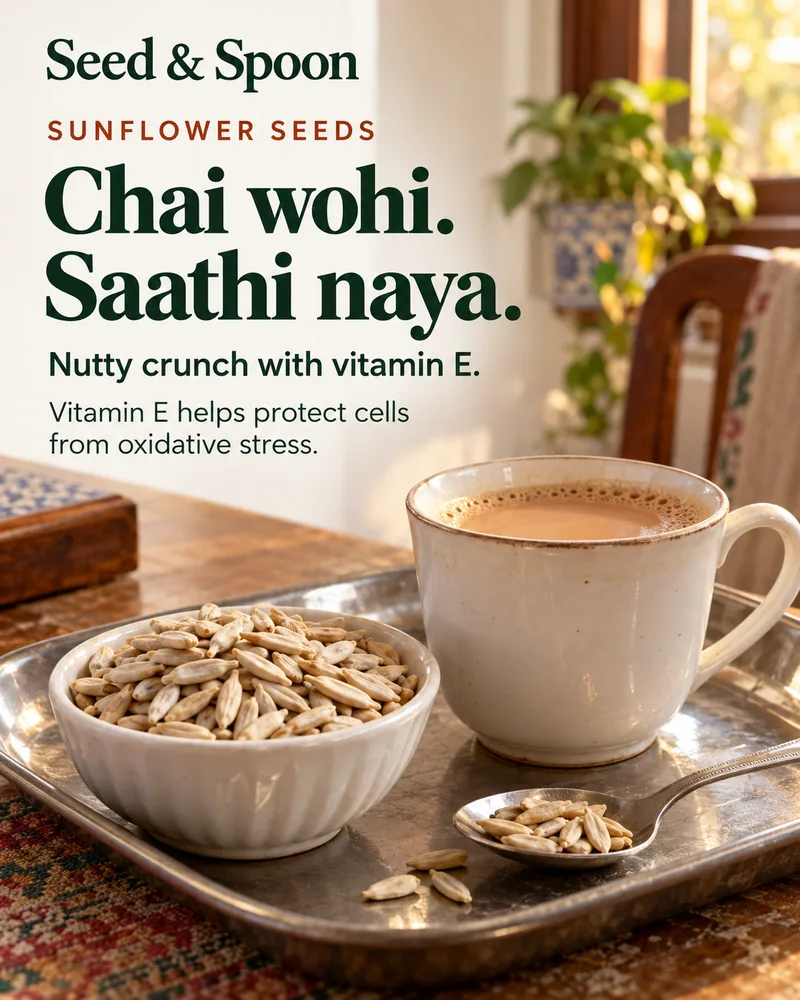
Suraj mukhi ke beej: kernels vs in-shell
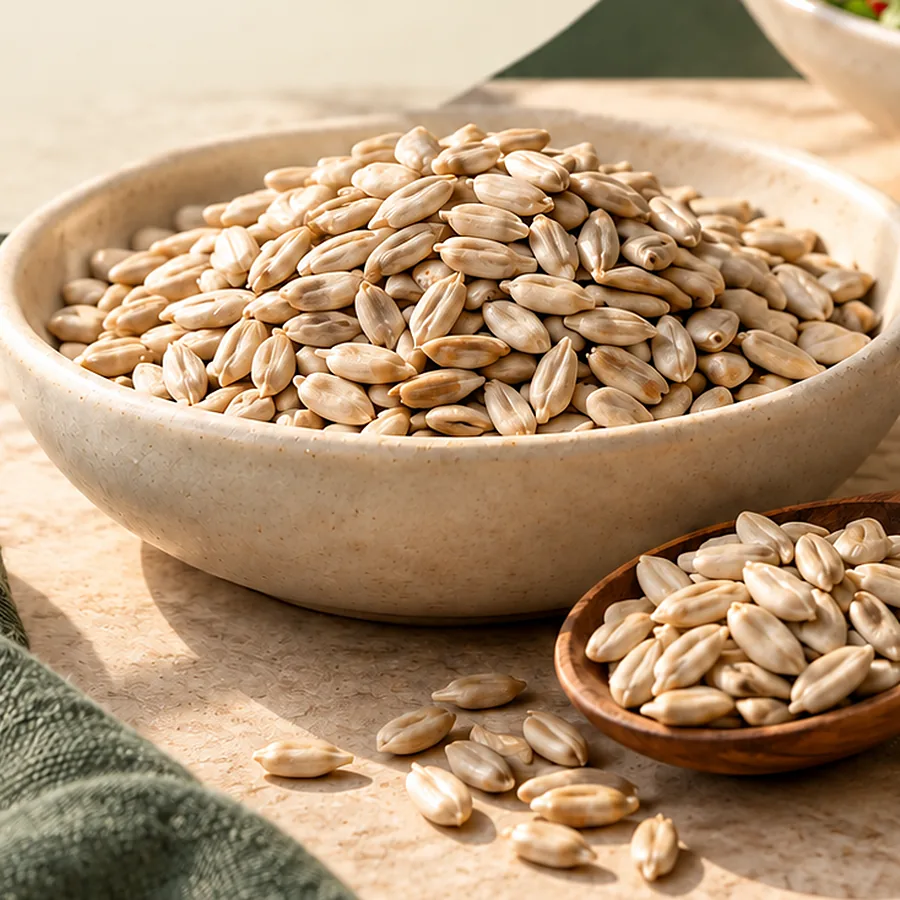
The black-and-white striped seeds sold as a roasted, salted timepass snack are whole seeds in their shells. The grey-green kernels inside are what we sell: hulled and ready to eat. The shells are tough and are not meant to be eaten.
Chhilke wale namkeen beej mein namak kaafi hota hai, is liye roz ke liye unsalted kernels behtar hain.
What is in 28 g (1 oz) of sunflower seeds
USDA FoodData Central lists, for 28 g of dried sunflower kernels: about 165 kcal; 5.9 g protein; 14.6 g fat, mostly unsaturated; 2.4 g fibre; 10 mg vitamin E; 92 mg magnesium; 15 µg selenium; 64 µg folate.
USDA lists 1 cup of kernels at 140 g, so a level tablespoon is about 9 g, with roughly 3 mg of vitamin E and 50 kcal. Roasting lowers the vitamin E a little: the NIH lists 7.4 mg for 1 oz of dry-roasted kernels.
Vitamin E: what it does
Vitamin E is a fat-soluble antioxidant: it helps protect cells from damage by free radicals and plays a part in immune function (NIH). Adults need 15 mg a day. The NIH lists sunflower seeds among the top food sources, with 1 oz of dry-roasted kernels giving about half the Daily Value.
Food is the sensible route. Harvard's Nutrition Source notes that most large randomised trials of vitamin E supplements have shown no benefit for heart disease, and that there is no evidence of toxic effects from the vitamin E found naturally in foods. That is a good reason to get it from seeds, nuts and vegetable oils rather than high-dose capsules, unless your doctor advises otherwise.
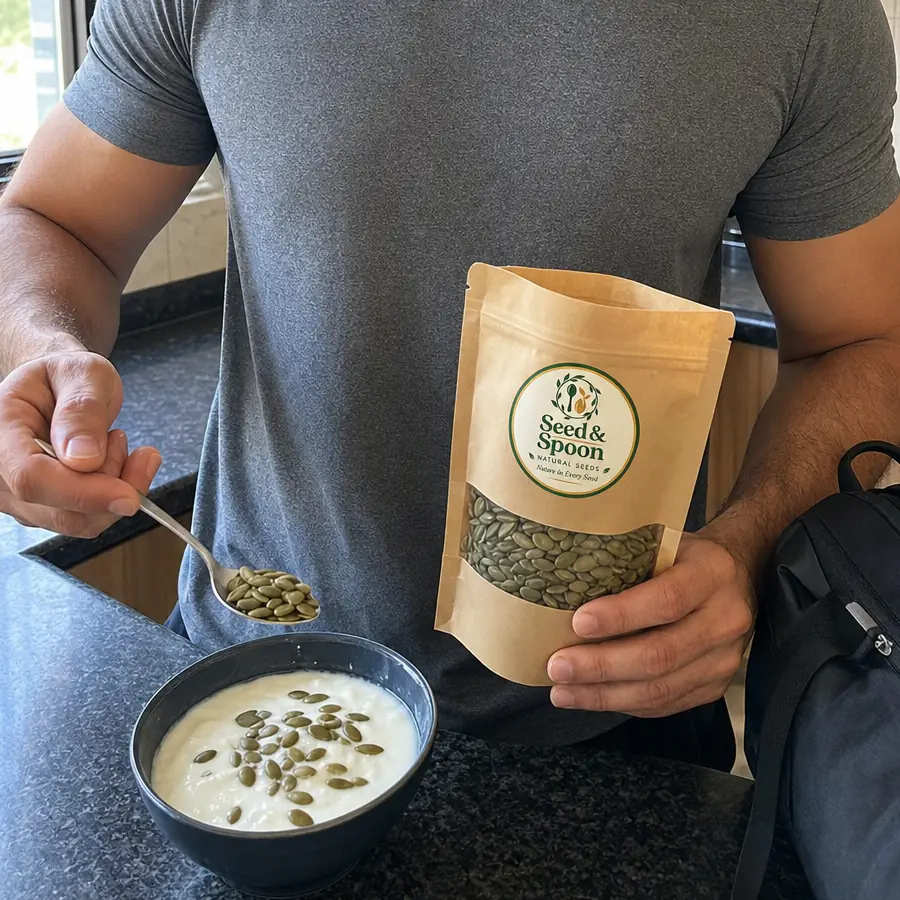
Deficiency is rare in healthy people: the NIH notes it usually occurs with conditions that affect how fat is digested or absorbed. For most people, the point is simply to eat vitamin E-rich foods regularly, and a spoonful of sunflower kernels on your dahi or salad is one of the easiest ways to do it.
Selenium, magnesium and folate
Sunflower kernels also bring selenium, about 15 µg per 28 g. Adults need 55 µg a day, and selenium is part of proteins involved in thyroid hormone metabolism and in protecting cells from damage (NIH).
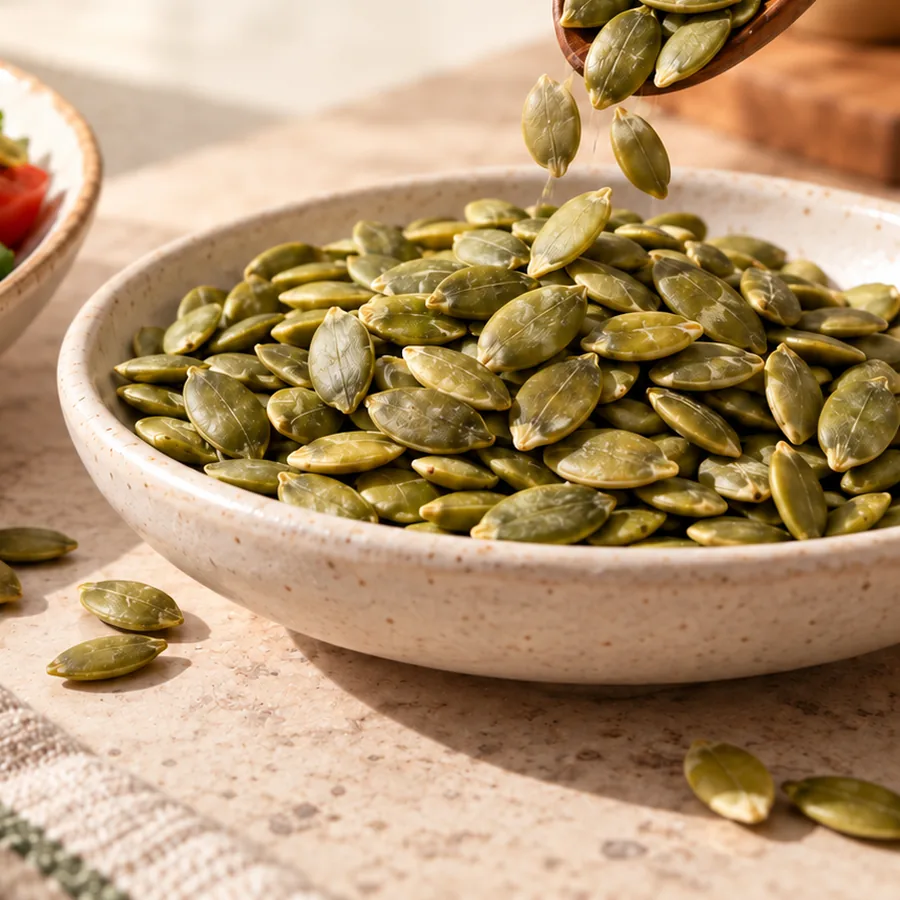
The same 28 g gives about 92 mg of magnesium and 64 µg of folate (USDA). Pumpkin seeds have more magnesium; sunflower seeds have far more vitamin E. Using both covers more ground.
Fats and calories: keep it to a handful
Most of the fat in sunflower seeds is unsaturated, mainly linoleic acid, an omega-6 fat. Unsaturated fats are part of a healthy diet, especially when they take the place of saturated fats.
The catch is calories: 28 g has about 165 kcal. A small handful with chai works best as a swap for fried namkeen, not as an extra on top of it.
Sunflower seeds vs sunflower oil
Sunflower oil is a common cooking oil in Pakistani kitchens, and it also contains vitamin E. But the oil is almost pure fat: it has none of the seed's protein or fibre, and much less of its magnesium and selenium. Eating the seed gives you the whole package.
So there is no need to add extra oil for vitamin E. A spoonful of kernels over your salad does more good than a spoonful of oil in the pan.
How much per day, and easy ways to eat them
1–2 tablespoons on food, or a small handful (about 28 g) as a snack, suits most adults.
Ideas: with chai instead of namkeen; over salad, raita or dahi; in homemade granola or energy laddu; lightly toasted in a dry pan with a pinch of chaat masala. More in 5 desi breakfast ideas with seeds.
Pair with pumpkin seeds: Gym Crunch Mix has both, with watermelon magaz, ready to eat. See also pumpkin seeds benefits.
Choosing and storing: good kernels are whole, pale grey-green and dry, with no bitter or paint-like smell, which is a sign of stale oil. Keep the pouch sealed, away from heat and light, and move it to the fridge in the hottest months.
This is general information, not medical advice. If you have a health condition, are pregnant or breastfeeding, or take regular medicines, check with your doctor before making big changes to your diet.