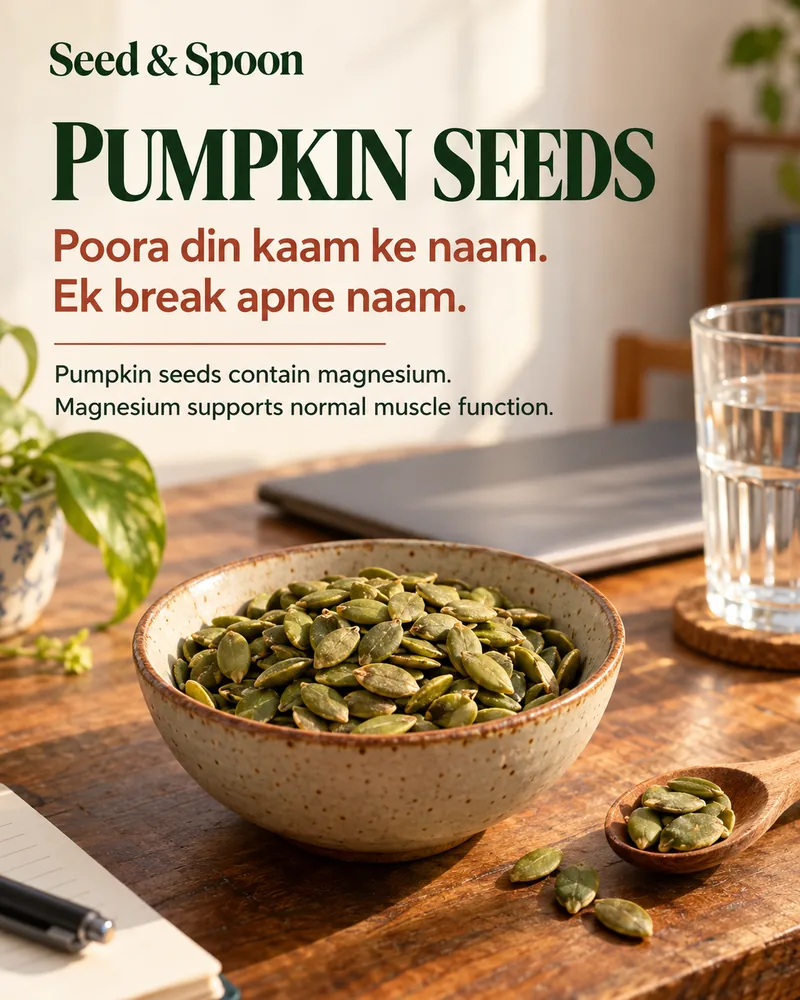
Kaddu ke beej: green kernels vs white shells
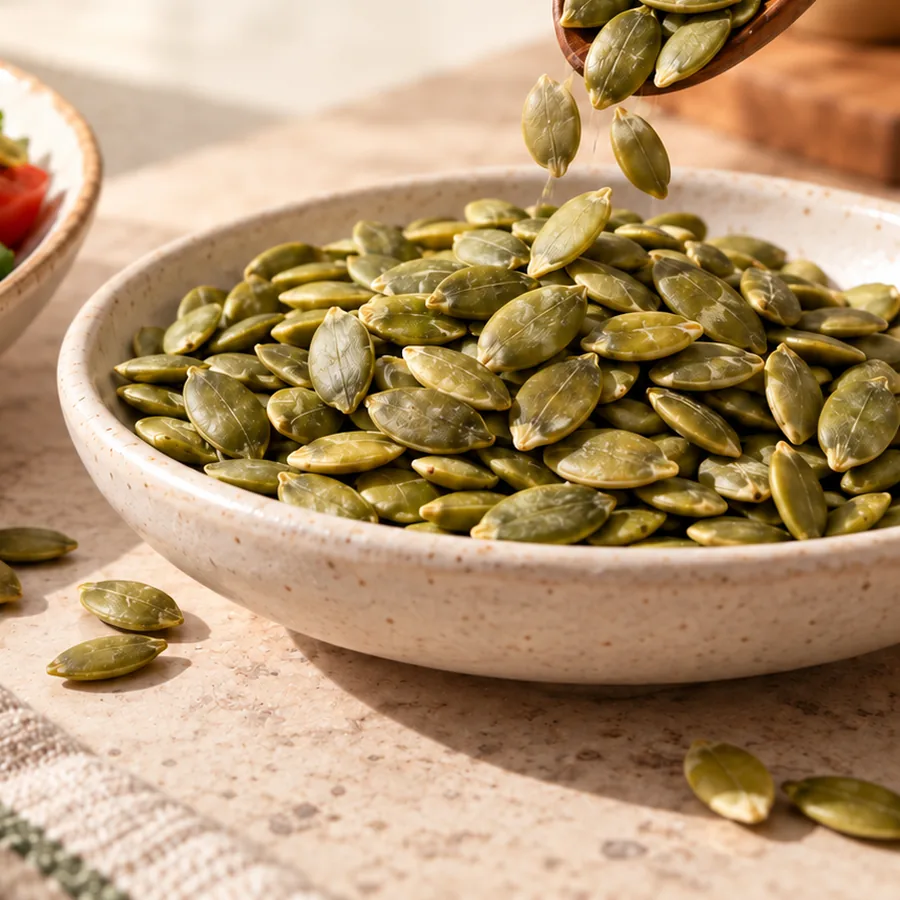
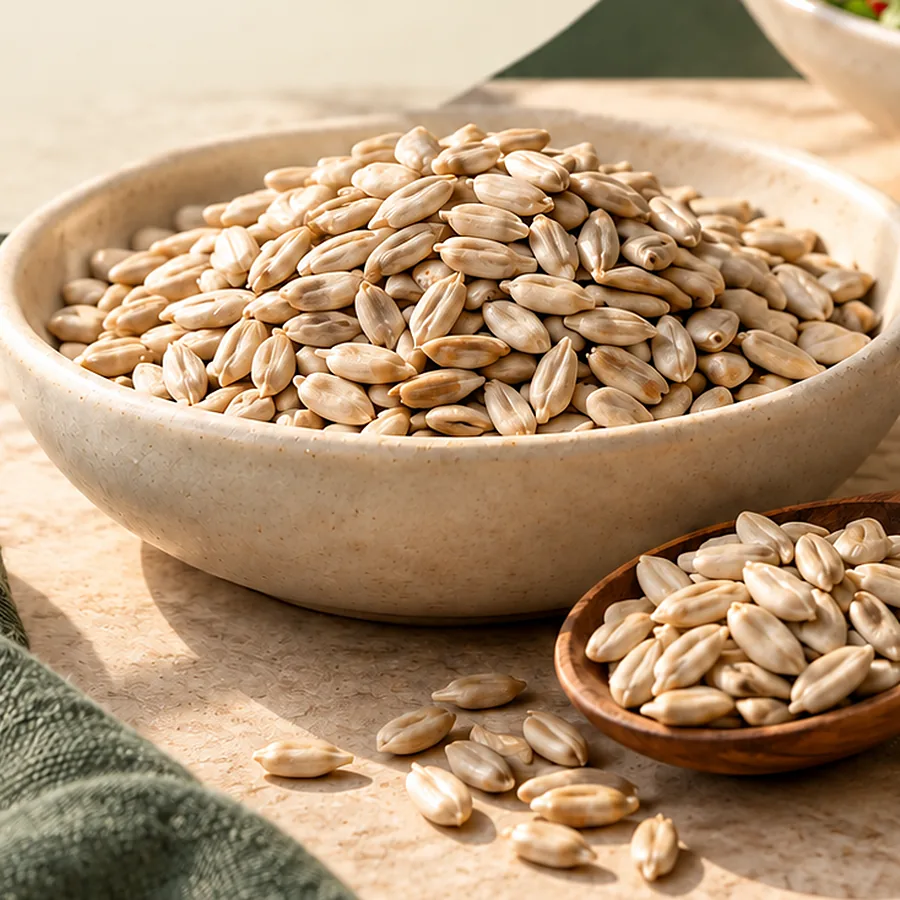
Pumpkin seeds come two ways. Whole seeds have a flat, cream-coloured shell; hulled kernels (sometimes called pepitas) are the green seeds inside, ready to eat. We sell hulled kernels, and the numbers in this guide are for hulled, dried kernels.
Chhilke wale beej aur hare, chhile hue beej ki nutrition thodi alag hoti hai, isliye label zaroor dekhein.
What is in 28 g (1 oz) of pumpkin seeds
According to USDA FoodData Central, 28 g of dried pumpkin seed kernels has about: 158 kcal; 8.6 g protein; 13.9 g fat, mostly unsaturated; 1.7 g fibre; 168 mg magnesium; 2.2 mg zinc; 2.5 mg iron; 350 mg phosphorus.
USDA lists 1 cup of kernels at 129 g, so one level tablespoon is about 8 g, with roughly 48 mg of magnesium and 45 kcal.
How pumpkin seeds compare with other seeds
Per 28 g, using USDA figures: pumpkin kernels have about 168 mg magnesium, against 95 mg in chia, 111 mg in flaxseed and 92 mg in sunflower kernels. Pumpkin also leads on zinc (2.2 mg, against about 1.3 mg in chia and 1.4 mg in sunflower) and on protein (8.6 g, against 4.7 g in chia, 5.2 g in flaxseed and 5.9 g in sunflower).
Where pumpkin is weaker: it has much less fibre (1.7 g per 28 g, against 9.8 g in chia and 7.7 g in flaxseed) and almost no ALA omega-3. That is why it pairs well with chia or alsi rather than replacing them.
Magnesium: the standout
Magnesium is involved in hundreds of enzyme reactions in the body, including muscle and nerve function, blood sugar control, blood pressure regulation and making energy, according to the NIH Office of Dietary Supplements. Adults need 310–320 mg a day (women) and 400–420 mg a day (men).
The NIH lists pumpkin seeds among the richest food sources of magnesium. A 28 g snack of kernels gives roughly 40–55% of what most adults need in a day, which is a lot for a small handful.
Zinc and iron
Zinc supports immune function and wound healing. Adults need about 8 mg a day (women) and 11 mg (men), and 28 g of pumpkin kernels gives about 2.2 mg (NIH, USDA).
Pumpkin seeds also contain iron, about 2.5 mg per 28 g. This is non-heme (plant) iron, which the body absorbs less well than iron from meat. The NIH notes that vitamin C helps: eat your seeds with lemon, tomato, amrood or other fruit. For context, women aged 19–50 need 18 mg of iron a day and men need 8 mg.
What the research does and does not say
The nutrient facts above are solid. Claims you may see online, that pumpkin seeds fix sleep, the prostate, blood sugar or hormones, are a different matter: the studies behind them are mostly small, short, done in animals, or used pumpkin seed oil or extracts rather than everyday amounts of seeds. Cleveland Clinic, for example, calls the prostate and bladder findings preliminary, and those studies used pumpkin seed oil combined with saw palmetto.
So we keep it simple: pumpkin seeds are a nutritious, magnesium-rich food. Kaddu ke beej koi dawai nahi, lekin achi khurak ka hissa zaroor ban sakte hain.
How much per day?
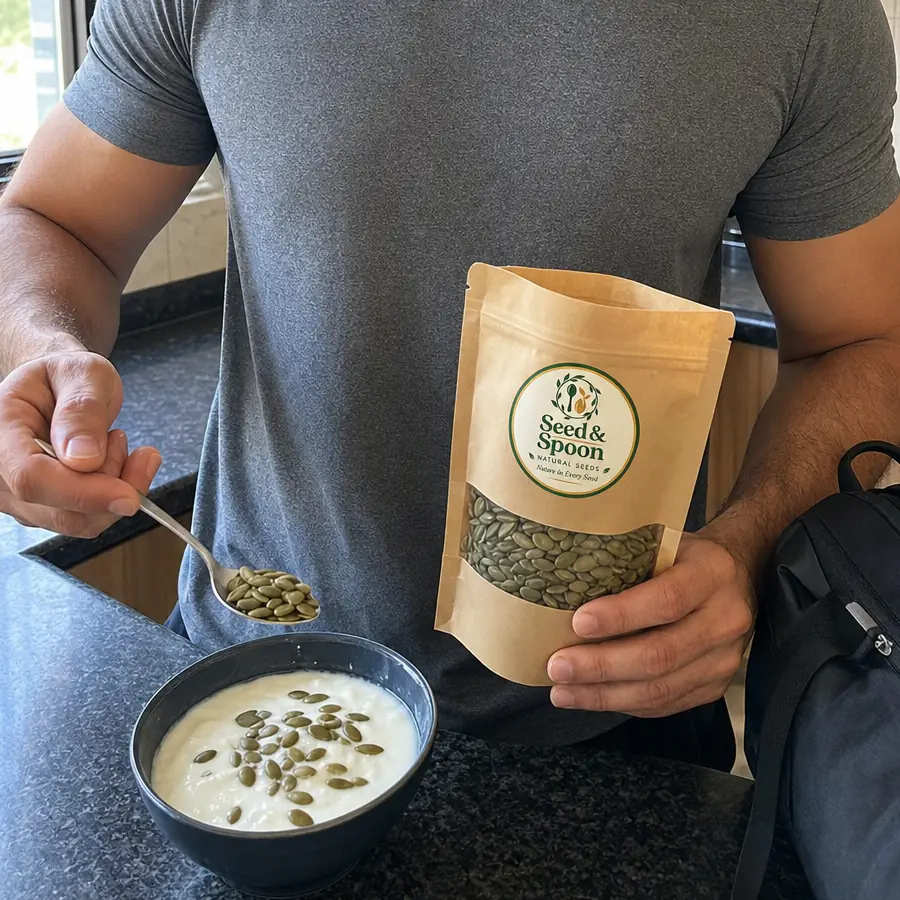
1–2 tablespoons (about 8–16 g) sprinkled on food, or a small handful of about 28 g as a snack, suits most adults. Because 28 g has about 158 kcal, eating straight from the pouch adds up quickly; use a spoon or a small katori.
Choose unsalted kernels. Salted, roasted pumpkin seeds add sodium. If you eat several seeds a day, see how much seeds per day for a simple plan.
Choosing and storing pumpkin seeds
Good kernels are plump, evenly green and dry, with no dust, broken shells or bitter, oily smell. Buy them in a sealed pouch with a packed date.
Because pumpkin seeds are rich in oil, heat and light make them go stale. Keep the pouch sealed in a cool cupboard away from the stove, move it to the fridge in the hottest Lahore months, and toast only what you will eat in a few days.
Easy ways to eat them
On dahi with banana, in raita, over kheera-tamatar salad, or dry-toasted with chaat masala. Our five simple ways to eat pumpkin seeds has the details. Pumpkin and sunflower are a good pair: Gym Crunch Mix has both, with watermelon magaz, ready to eat.
This is general information, not medical advice. If you have a health condition, are pregnant or breastfeeding, or take regular medicines, check with your doctor before making big changes to your diet.